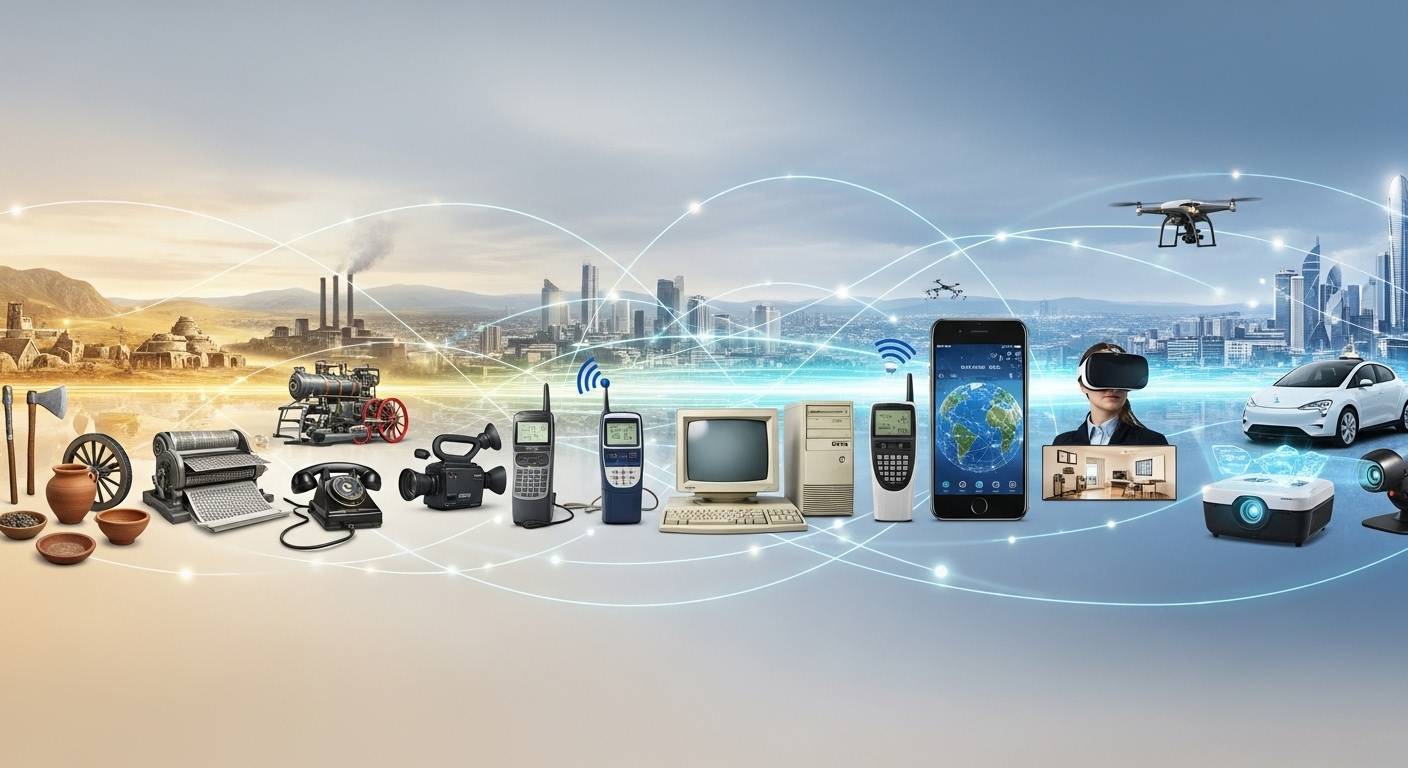
Over thousands of years, technology has evolved from analog systems to digital systems, changing how humans store and share information. In early societies, analog tools like speech, writing, and physical instruments were slow but closely tied to real-world context. In class, I learned that these systems required human interpretation at every stage, which made information more localized and dependent on physical evidence. The invention of the printing press marked a major analog advancement by allowing information to be reproduced and shared on a larger scale. Later, the Industrial Revolution introduced communication tools like the telegraph and telephone, which increased speed but still relied on continuous physical signals. We discussed in class how these systems can be understood through systems thinking, where communication depended on infrastructure and energy flow.